
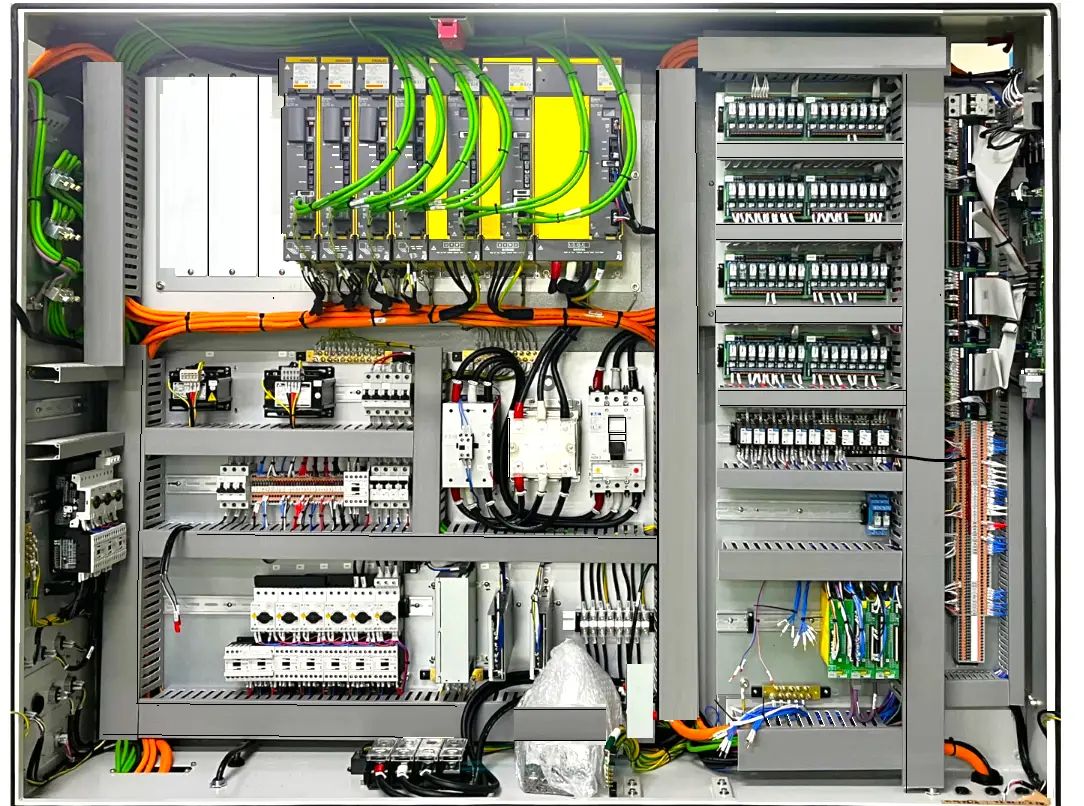
A PLC (Programmable Logic Controller) Control Panel is an automation panel in industry that is used to drive machines and business operations utilizing coded logic. It accepts input signals from sensors and field devices, processes them as per the defined logic, and sends output commands to motors, actuators, valves, and other equipment. The PLC control panels are commonly popular in the manufacturing industry, process industries, utilities and infrastructure construction where accuracy, reliability and automation are paramount.
PLC panel is aimed at controlling and realising machine logic on the field level, and SCADA Panel is oriented primarily to monitoring, acquiring data and supervisory control. PLCs have equipment directly managed, and SCADA have a central interface to view data, create reports, and send commands to PLCs in a remote area. PLC and SCADA panels are often integrated into a single automation system and used across a range of industrial applications.
A PLC control panel normally has a PLC CPU, input/output (I/O) modules, power supply, relays, contactors, circuit breakers, communication modules, terminal blocks, HMIs (not mandatory), and protection devices. These modules are mounted in a mechanical arrangement to guarantee valid signal manipulation, harmless power transmission, and effective vitalization of business operations.
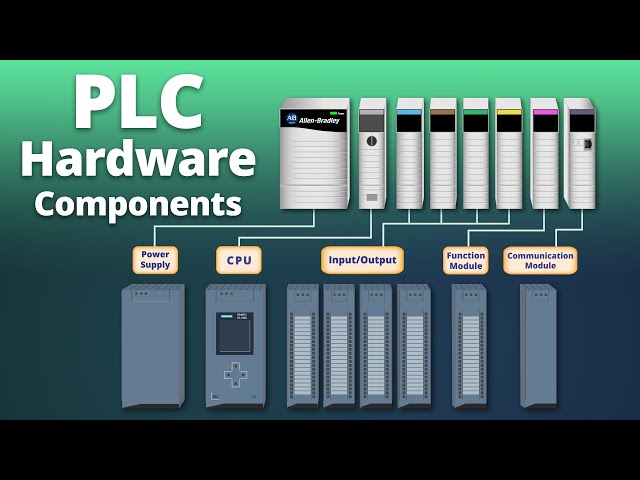
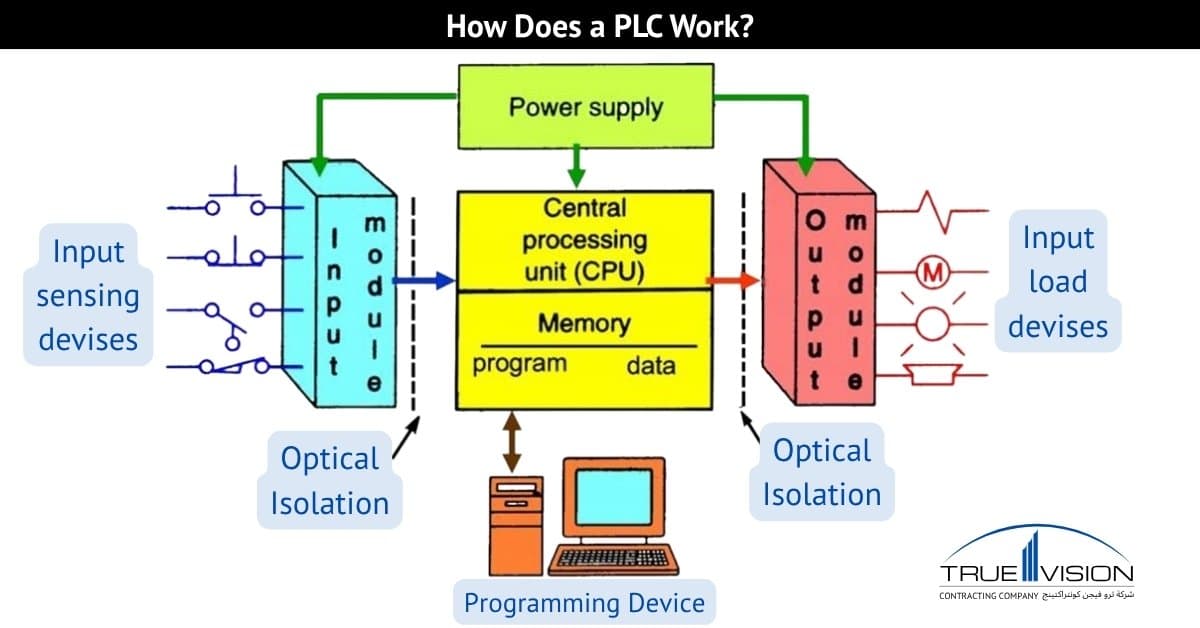
The PLC control panel receives real-time input data of sensors, switches, and instruments fitted on machines or processes. This data is processed according to a set of programmed logic in the PLC’s memory.
According to the logical decision, the PLC transmits output signals to control systems like motors, solenoid valves and actuators. This is a continuous process, which means that the industrial processes can be accurately, quickly, and reliably controlled, with minimum human participation.
Programs that can be easily changed enable a rapid adaptation to the changing requirements of the process.
Provides high accuracy and rapid reaction to urgent industrial operations.
Made to operate continuously in harsh conditions.
Status indicators and diagnostics facilitate the diminution of downtime.
Supports HMI, SCADA, VFDs and other automation systems.
1. Better operational efficiency.
Automation is more productive and lessens manual labour.
2. Repeatable and controlled processes.
Guarantees the consistency of the product quality and dependable production.
3. Reduced human error
Robotised technology reduces errors in operation.
4. Reduction in maintenance and downtime.
Early faults are detected before big failures occur in the systems.
Parameter
Specification
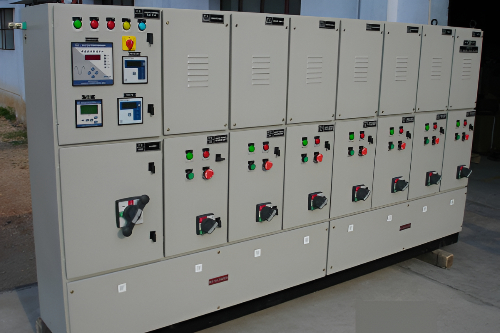
A reliable PLC panel manufacturer in India is concerned with fine programming, quality hardware and system integration. Proven suppliers provide PLC control panels that can perform the intense automation specifications of the industry in the long run.
PLC control panels are designed and manufactured by Three Phase Electric Company for industrial processes. Their panels have high-quality hardware, proper programming, as well as quality tests. The company provides PLC control panels, which increase productivity, improve management of the process, and long-term efficiency in operation with customized automation solutions and quality technical service.